Speakers
Simon Aberger
Austria
Simon is a PhD candidate in Univ.-Prof. Dr. Kathrin Ellers group and works as a Nephrologist at the Medical University of Graz. His research currently centers on data science, aiming to provide translational disease classification by linking vascular and immunological disease biomarkers with large clinical data sets.
Daniela Allmer
Austria
Daniela is a PhD candidate in Ao. Univ.-Prof. Dr. Georg Böhmigs group at the Medical University of Vienna, and holds a MSc in Genetics and Developmental Biology from the University of Vienna. Her research currently centers on in vitro studies aiming to understand the cellular and molecular mechanisms that contribute to the effect of the monoclonal antibody felzartamab on Natural Killer cells in the context of AMR.

Lena Berchtold
Switzerland
PD Dr. Lena Berchtold, MD, PhD, is a Senior Consultant in the Division of Nephrology at Geneva University Hospitals (HUG) and the University of Geneva, Switzerland. Her clinical and research interests focus on chronic kidney disease, kidney transplantation, and the development of non-invasive imaging and biomarker-based approaches for the assessment of kidney fibrosis and the prediction of renal outcomes. She is the principal investigator of an SNSF Ambizione project aimed at improving kidney allograft selection through innovative imaging technologies. She is a founding board member of Young Swiss Nephrology and is actively involved in postgraduate medical education and national and international research collaborations.
Georg Böhmig
Austria
Georg Böhmig, MD, is an Associate Professor of Medicine in the Division of Nephrology and Dialysis, Department of Medicine III at the Medical University of Vienna in Vienna, Austria. Dr. Böhmig also serves as coordinator of the Vienna kidney transplant waiting list and of ABO- and HLA antibody-incompatible kidney transplantation programs, including the Austrian KPD program. He received his medical degree from the University of Vienna and trained at the Vienna Institute of Immunology. He is board-certified in internal medicine, nephrology, and intensive care medicine at the Medical University of Vienna.
Dr. Böhmig has authored more than 260 peer-reviewed journal articles, with a continuous focus on translational research in transplant immunology. The major research interests of his group (VIETAC; Vienna Transplant and Complement Lab) include diagnostic and therapeutic aspects of antibody-mediated organ allograft rejection. His current projects focus on novel strategies for ex vivo monitoring of humoral alloimmune responses and the evaluation of anti-humoral treatment approaches, including apheresis (crossmatch conversion, ABO antibody depletion, rejection treatment), proteasome inhibition, and antibodies targeting complement, interleukin-6, CD38, and BCMA.
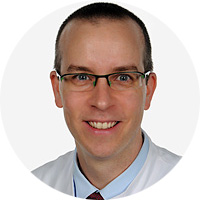
Peter Boor
Germany
Professor Peter Boor is the chair of Translational Nephropathology, RWTH Lecturer, and senior consultant pathologist at the Institute of Pathology at the RWTH University Hospital Aachen, and coordinator of the Electron Microscopy Facility and Digital Pathology. He is a member of several national and international societies of pathology, renal pathology, and nephrology, and received several prestigious awards from these societies. His research group, the LaBooratory of Nephropathology, focuses on novel diagnostic biomarkers, particularly digital pathology and AI, imaging, in vivo animal modeling, and understanding chronic kidney diseases and organ fibrosis. He published >360 original papers, reviews and editorials, and several book chapters.
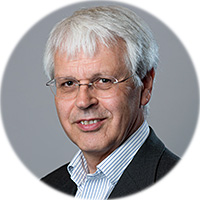
Klemens Budde
Germany
Klemens Budde MD is Deputy Medical Director of the Department of Nephrology and Medical Intensive Care at Charité Universitätsmedizin Berlin, Germany, where he holds an endowed professorship for pharmacodynamics on immunosuppression after kidney transplantation since 2006. After receiving his medical degree from Tübingen University, Germany, Dr. Budde completed training in Nephrology at Friedrich-Alexander University, Erlangen-Nürnberg and subsequently at the Charité, Humboldt University. Dr. Budde also completed a postdoctoral fellowship in Nephrology at Yale University, New Haven, Connecticut, USA. He possesses a board certification in Internal Medicine, in Nephrology and a Certification for Hypertensiology. He is a board member in several commissions of national and international societies.
Professor Budde had received the Hans-U.-Zollinger Research Prize of the German Association for Nephrology in 2004 for outstanding achievement in his field. In 2018 he became working group chair for Medicine and Care of the platform “Lernende Systeme”, Germany´s platform for artificial intelligence.
Prof. Budde’s main research interests include kidney transplantation, eHealth and genetic diseases of the kidney. He is the author or co-author of more than 450 journal articles, and has lectured nationally and internationally on numerous topics in transplantation.
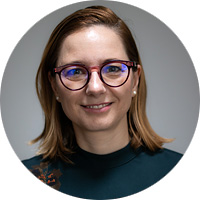
Ivana Dedinská
Slovakia
Prof. Ivana Dedinská, is Head of the Transplant-Nephrology Department at University Hospital Martin and Professor of Internal Medicine at Jessenius Faculty of Medicine, Comenius University, Slovakia. Her clinical and research interests focus on kidney transplantation, glomerular diseases, and transplant biomarkers including donor-derived cell-free DNA. She has completed academic fellowships and visiting appointments at Charité Universitätsmedizin Berlin and Weill Cornell Medical College in New York. Prof. Dedinská currently serves as President of the Slovak Transplant Society and Board member of the ERA DESCaRTES Working Group. Prof. Dedinská has received several national and international awards for her contributions to nephrology and transplantation medicine.
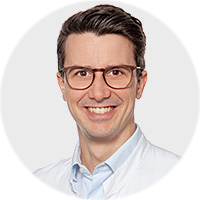
Matthias Diebold
Switzerland
Matthias studied medicine at the University of Zurich and trained in Internal Medicine and Nephrology at the Cantonal Hospital in Frauenfeld and the University Hospital Basel. After completing his clinical education, he had the opportunity to undertake a research fellowship in Vienna under the leadership of Georg Böhmig. In 2025, he completed his Master's in Epidemiology at the London School of Hygiene and Tropical Medicine.
He is currently working as a senior physician in Transplantation Immunology and Nephrology at the University Hospital Basel and also serves as a visiting scientist at the Medical University of Vienna. His research focuses on the role of natural killer cells in microvascular inflammation, where he collaborates with the VIETAC research group.
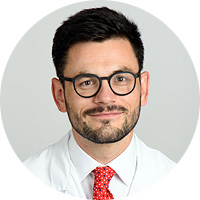
Dusan Harmacek
Switzerland
Dusan Harmacek graduated from the First Faculty of Medicine at Charles University in Prague and works as a nephrologist at University Hospital Zurich, with clinical interests in kidney transplantation, nephrolithiasis, and onconephrology. His research focuses on molecular diagnostics in kidney allograft biopsies and calcium oxalate nephropathy. He is the current President of Young Swiss Nephrology.
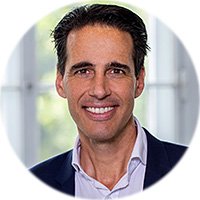
Manfred Hecking
Austria
Manfred Hecking studied music and medicine in Berlin and initially worked as a classical double bass player (full member Munich, then Vienna Philharmonic). After doctorate completion, Hecking enrolled as PhD-student in Maria Sibilia's lab and trained in internal medicine and nephrology at MedUni Vienna. He completed his habilitation, became senior physician and associated professor before joining "Kuratorium for Dialysis and Transplantation" (KfH) as medical director of a large kidney center in Bavaria. In 2024, Manfred Hecking returned to his previous position at MedUni Vienna's nephrology department, however with a successful KfH-MedUni collaboration in the background.
Hecking's clinical research focuses on kidney replacement therapy, particularly fluid management in dialysis patients, post-transplant diabetes and gender differences in kidney disease. Hecking is a board member of the EUDIAL work group from the ERA-EDTA and leads a research group of wide content range and personnel: https://hd-research.net
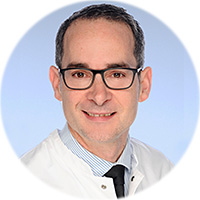
Rafael Kramann
Germany
Rafael Kramann is Professor of Medicine and Chairman of the Department of Medicine 2 (Nephrology, Rheumatology, Transplantation, Immunology and Hypertension) he is further founding Director of the Center of Phase Transition in Chronic Disease at RWTH Aachen, Germany and directs the Laboratory of Translational Kidney and Cardiovascular Research at the Erasmus Medical Center Rotterdam, NL. He is adjunct professor at the Mount Desert Island Biology Laboratory and the Jackson Laboratory in Bar Harbor, Maine. Rafael Kramann received his MD in cardiology at RWTH Aachen University and a PhD in internal medicine at Erasmus MC, Rotterdam and postdoctoral training at Brigham and Women´s Hospital, Harvard Medical School, Boston MA.
His basic and translational research focuses on understanding chronic kidney disease, cardiovascular diseases and organ fibrosis (www.kramannlab.com). He integrates state of the art genetic fate tracing, gene editing, single cell, multi-omics and systems biology technologies together with clinical datasets and advanced ex vivo disease modeling technologies to unravel mechanisms, identify novel therapeutic targets and develop targeted therapeutics for patients with chronic kidney disease, heart failure and organ fibrosis. To translate his research towards patient benefit Dr. Kramann has founded several biotech companies. MatriTarg laboratories founded in 2013 won the Harvard Innovation Lab Dean´s Health and Lifescience Challenge in the same year. The technology behind the company was later licensed to industry. Sequantrix GmbH (www.sequantrix.bio) founded in 2023 is developing novel therapeutics chronic kidney disease, heart failure and hematopoietic malignancies using artificial intelligence and large single cell and spatial genomic datasets as well as organoid screening platforms.
Dr. Kramann has authored more than 250 primary research articles, book chapters and review articles and is recipient of various prestigious awards including the Stanley Shaldon Award of the European Renal Association (ERA) 2014, the Nils Alwall, Carl Ludwig and Franz Volhard Awards 2014, 2015 and 2019 of the German Society of Nephrology, the Bernd Tersteegen Award 2015 of the German Dialysis Association, the Desiderius Award of the Erasmus University in 2018, the Theodor Frerichs Award of the German Society of Internal Medicine (DGIM), the Wilhelm Vaillant Award in 2021 and the Donald W Seldin Award of the American Heart Association and the American Society of Nephrology in 2025. Dr. Kramann was elected to the American Society of Clinical Investigation 2023. He is further NWO-VIDI Laureate 2021 and ERC Starting Grant (2015), Consolidator Grant (2022) and Proof of Concept Grant (2023, 2025) recipient and has raised over €40 Mio in Research funding as well as a recent large scale support (over €90 million) from the German Government to found the Center for Phase Transition in Chronic Disease, a state of the art new research building that allows integrative computational and wetlab work to dissect mechanisms of fibrotic diseases and identify novel therapeutic targets. Dr. Kramann is coordinator of various national and international research consortia and PI at the British Heart Foundation Center of Excellence at the University of Edinburgh, UK where he holds an honorary Professorship.
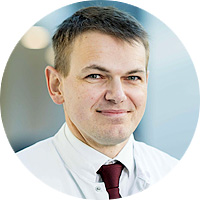
Andreas Kronbichler
Austria
Andreas Kronbichler is Professor and Head of Department of Internal Medicine IV, Nephrology and Hypertension, at Medical University Innsbruck, Austria, where he also completed his medical training. Professor Kronbichler was a Principal Site Investigator for the ADVOCATE and GOOD-IDeS01 and 02 trials. He is the Lead of an Investigator-Initiated Trial (IIT) called OBELIX-NEPHROSIS. He has over 300 peer-reviewed publications and reviewer of major journals in medicine, nephrology and rheumatology. His research focuses on ANCA-associated vasculitis, anti-GBM disease and nephrotic syndrome. Professor Kronbichler is the Chair of the European Renal Association (ERA) Immunonephrology Working Group (ERA) and a Distinguished Fellow of the European Renal Association (ERA). In 2023, he was awarded the Nils-Alwall-Preis by the German Society of Nephrology (DGfN) and has recently been awarded the Eberhard Ritz Award of the ERA (2024).
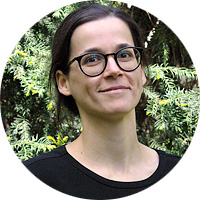
Katharina Mayer
Austria
Katharina received her medical degree from the Medical University of Vienna. She was trained in Immunology and completed her PhD at the Institute of Immunology at the Medical University of Vienna. Since joining the Division of Nephrology and Dialysis at the same institution, her research has focused on transplant immunology, especially antibody-mediated kidney transplant rejection and the immunological monitoring of kidney transplant recipients.
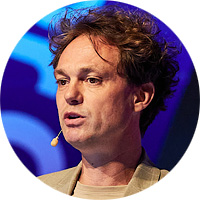
Maarten Naesens
Belgium
Maarten Naesens is a transplant nephrologist at the University Hospitals Leuven. Next to the clinical duties, he performs translational research at the Department of Microbiology, Immunology and Transplantation at the KU Leuven, focusing on risk factors, diagnosis, and impact of kidney transplant rejection. From 2024 onwards, he is Associate Editor of Kidney International, the official journal of the International Society of Nephrology (ISN) and is involved in the organization of the European Society of Organ Transplantation (ESOT) and Banff congresses. He has published more than 300 peer-reviewed articles in the field of kidney transplantation.
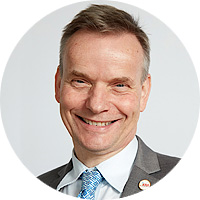
Ivan Rychlík
Czech Republic
Ivan Rychlík, MD, PhD, FASN, FERA, FISN, Professor of Medicine
Born in 1962, graduated in 1987, Summa cum Laude, General Faculty of Medicine, Charles University Prague; further graduated in Internal Medicine (1994) and Nephrology (1996), past-ISN Fellow (1998, Heidelberg University, Germany, tutor Prof. E. Ritz). Since 1987 up to now employed in Charles University, Prague, since 2011 Full Professor of Medicine, since 2016 Head of the Department of Medicine, Third Faculty Medicine, Prague.
His current main scientific interests are diabetic nephropathy and epidemiology of CKD. He is a (co-)author of >300 peer-reviewed scientific articles, 12 monographs and 55 chapters. He had >350 presentations in international meetings, he was a (co-) investigator of several scientific Czech and EU grants. His SCI is >5500, H-index 34. He serves as the Editor-in-Chief of Case Reports in Nephrology and Dialysis (Karger), Section-Editor of Clinical Kidney Journal (OUP), Kidney Diseases.
He had numerous organizing and educational activities based on the Czech Society of Nephrology (multi past-President, co-founder and Chair of the Registry of dialysis patients, co-founder of Registry of renal biopsies, co-founder and multi past-Chair of Jan Brod Educational Symposium, Chair of Nephrology Winter School since 2010), ERA (past Secretary/Treasurer, past Council Member, past Registry Member, ERA Congress President 2025), ISN (past member of EEC board), Ministry of Health (Head of Nephrology Accreditation Committee), and others.
He was awarded by several Czech and international Awards; he is Honorary Member of the Polish and the Slovak Society of Nephrology, Distinguish Fellow of ERA, Fellow of ASN, Fellow of ISN.
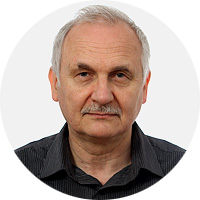
Vladimír Tesař
Czech Republic
Vladimir Tesar, graduated from Charles University in Prague in 1982 where he also specialized in nephrology and obtained PhD degree (in 1991). Since 1999 he is a full professor of medicine in the same university. He is currently working as the head of Department of Nephrology, 1st Faculty of Medicine, Charles University in Prague. His long-term interest is glomerular disease (namely IgA nephropathy, ANCA-positive vasculitis, lupus nephritis, membranous nephropathy and FSGS), ADPKD and cardiovascular complications of renal failure and he co-authored many papers in high-impact journals, namely on these topics. He also served as a member of the Scientific Advisory Board of ERA-EDTA (2008–2014), member of the Council of ERA-EDTA (2011–2014), chair of the Immunonephrology Working Group of ERA-EDTA (2015–2021) and member of the Executive Committee of ISN. He was also member of the board of 2021 KDIGO Guidelines for Glomerulonephritis and the co-author of 2024 KDIGO guidelines for ANCA-associated vasculitis.
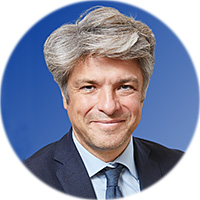
Olivier Thaunat
France
Olivier Thaunat is Professor of Nephrology and Clinical Immunology at the Hospices Civils de Lyon and Claude Bernard University Lyon I.
He received his medical degree with specialization in Nephrology and Clinical Immunology from Pierre and Marie Curie University (Paris) in 2004, and in 2008 earned a PhD in Immunology at the same institution for his work on the role of lymphoid neogenesis in chronic graft rejection.
From 2009 to 2011, he conducted postdoctoral research in the Lymphocyte Interaction Laboratory, led by Facundo Batista, at the London Research Institute (United Kingdom), where he investigated the asymmetric segregation of antigen during B-cell division.
Since 2012, he has served as a university hospital physician at the Hospices Civils de Lyon, within the Department of Nephrology, Transplantation and Clinical Immunology at Hôpital Édouard Herriot. He also heads the IMAGINATION research team at the International Center for Infectious Disease Research (CIRI – INSERM U1111), which seeks to advance the understanding of transplant rejection and to design innovative therapeutic strategies.
Professor Thaunat is the author of 250 peer-reviewed publications and has delivered over 200 invited lectures at international conferences. He currently serves as President of the European Society for Organ Transplantation (ESOT).
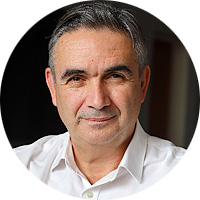
Ondřej Viklický
Czech Republic
Ondrej Viklicky, M.D., Ph.D., Professor of Medicine
Professor of Medicine at Charles University, Prague, Head of the Transplant Centre, Head of the Department of Nephrology and the Transplant Laboratory at the Institute for Clinical and Experimental Medicine, Prague. Medical director of high volume kidney transplant program since 2008. He received specialization in internal medicine and nephrology. He is currently a vice-president of Czech Society for Organ Transplantation and vice-president of Czech Society of Nephrology, former board member of ERA/EDTA Transplantation Working Group (DESCARTES) 2013–2018, board member of Scientific committee of The Transplantation Society 2015–2019. He organized many international and local symposia on kidney transplantation and nephrology, main editor of 6 books on kidney transplantation/nephrology. His research interest is in molecular pathology and immunology in transplantation. He participates on EU research Frame Projects dealing with tolerance and biomarkers in transplantation.
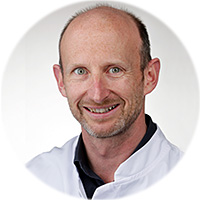
Daniel Zecher
Germany
Prof. Zecher is deputy head of the department of Nephrology at Regensburg University hospital and medical director of the Regensburg kidney transplant program. His research interests center around immunological barriers to long term kidney graft survival with a clinical focus on highly sensitized patients and new treatment strategies for ABMR.
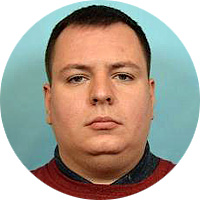
Ivan Zahrádka
Czech Republic
Ivan Zahrádka, M.D., Ph.D., is a nephrologist at the Department of Nephrology, Transplant Centre, Institute for Clinical and Experimental Medicine (IKEM) in Prague. He received his PhD from the First Faculty of Medicine, Charles University, in 2025 with a thesis on the immune response to pathogens and vaccination in patients with kidney failure and after kidney transplantation. His research focuses on clinical epidemiology of chronic kidney disease, infectious complications and vaccination in kidney transplant recipients, and the use of digital health, smart technologies and artificial intelligence in nephrology and transplant care.
